
Thursday, February 28, 2013
Circular RNAs throw genetics for a loop
"Behold the latest curio in the cabinet of RNA oddities: naturally occurring circular RNA molecules that influence gene expression." News article @ Nature

Labels: genomics, RNA, transcription


Thursday, September 06, 2012
ENCODE Project
This week, 30 research papers, including six in Nature and additional papers published by Science, sound the death knell for the idea that our DNA is mostly littered with useless bases. A decadelong project, the Encyclopedia of DNA Elements (ENCODE), has found that 80% of the human genome serves some purpose, biochemically speaking. “I don't think anyone would have anticipated even close to the amount of sequence that ENCODE has uncovered that looks like it has functional importance,” says John A. Stamatoyannopoulos, an ENCODE researcher at the University of Washington, Seattle. Full analysis @ Science

Labels: genome complexity, genomics, regulation, RNA
Thursday, July 29, 2010
'Identical' cells? Not so much
"Genetically identical cells may be far more different than previously believed. Published this week in Science, researchers find striking variation in levels of gene expression among individual, genetically identical E. coli, seemingly the result of simple chance." They also find that "a single cell’s protein and mRNA copy numbers for any given gene are uncorrelated."
Read more @The Scientist. Full paper in Science:
Y. Taniguchi et al "Quantifying E. coli proteome and transcriptome with single-molecule sensitivity in single cells," Science, 329:533-8, 2010.

Read more @The Scientist. Full paper in Science:
Y. Taniguchi et al "Quantifying E. coli proteome and transcriptome with single-molecule sensitivity in single cells," Science, 329:533-8, 2010.
Labels: genomics, transcription
Tuesday, November 24, 2009
Gene hunters
"Søren Brunak at the Technical University of Denmark and Kasper Lage, now at the Broad Institute in Boston, developed a computational method to predict which proteins most likely cause a particular disease. [...] This study was one of the first to use computational methods to predict a gene–phenotype relationship." article @ TheScientist.com.
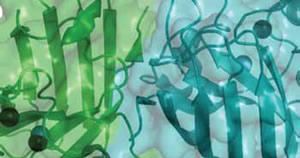
K. Lage et al., “A human phenome-interactome network of protein complexes implicated in genetic disorders,” Nat Biotech, 25: 309–316, 2007.
K. Lage et al., “A human phenome-interactome network of protein complexes implicated in genetic disorders,” Nat Biotech, 25: 309–316, 2007.
Labels: computational biology, disease, genetics, genomics, proteomics
Friday, October 16, 2009
Human genome in 3D
"The three-dimensional structure of the human genome has been mapped. Job Dekker of the University of Massachusetts Medical School in Worcester, Eric Lander of the Broad Institute in Cambridge, Massachusetts, and their co-workers identified segments of the genome that tend to sit close together. [...] The team found that each chromosome weaves between two compartments: one contains active genes; the other, more compact compartment houses inactive stretches of the genome. On a larger scale, the chromosomes are tightly packed into a 'fractal globule' (pictured) that remains unknotted to allow easy access to genes."

Labels: genomics, molecular structure
Tuesday, April 07, 2009
Gene Expression--Where to Start?
"To convert the encoded genetic information from eukaryotic DNA into proteins, base sequences of genes are first transcribed into RNA by RNA polymerase II. To produce functional RNA molecules, dozens of accessory factors are needed to define the proper locations for RNA polymerase II to begin and end transcription. Although we have some basic knowledge about how these factors work, it is still not possible to take a eukaryotic genome sequence and accurately predict what RNA species it will produce. Recent efforts to map and sequence "transcriptomes" have only increased the challenge by revealing a much more complex set of RNAs than expected, including many that do not produce proteins". Full article @ Science

Labels: gene regulation, genomics, RNA
Personalized genomes go mainstream
Commercial personal genome services could help people to understand more about their family medical history. Full article @ Nature News
Labels: genomics

