
Monday, April 01, 2013
A Computer Inside a Cell
"For the first time, synthetic biologists have created a genetic device that mimics one of the widgets on which all of modern electronics is based, the three-terminal transistor. Like standard electronic transistors, the new biological transistor is expected to work in many different biological circuit designs. Together with other advances in crafting genetic circuitry, that should make it easier for scientists to program cells to do everything from monitor pollutants and the progression of disease to turning on the output of medicines and biofuels." Full news article @ ScienceNOW

Labels: circuits, computation, computational biology, systems biology


Saturday, August 18, 2012
A Whole-Cell Computational Model
"An entire organism is modeled in terms of its molecular components. Complex phenotypes can be modeled by integrating cell processes into a single model. Phenotype from Genotype, in a computational model." Full article @ Cell

Labels: computational biology, genotype-phenotype map
Tuesday, November 24, 2009
Gene hunters
"Søren Brunak at the Technical University of Denmark and Kasper Lage, now at the Broad Institute in Boston, developed a computational method to predict which proteins most likely cause a particular disease. [...] This study was one of the first to use computational methods to predict a gene–phenotype relationship." article @ TheScientist.com.
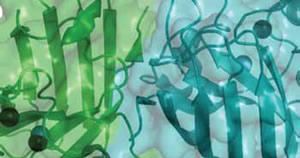
K. Lage et al., “A human phenome-interactome network of protein complexes implicated in genetic disorders,” Nat Biotech, 25: 309–316, 2007.
K. Lage et al., “A human phenome-interactome network of protein complexes implicated in genetic disorders,” Nat Biotech, 25: 309–316, 2007.
Labels: computational biology, disease, genetics, genomics, proteomics

