
Monday, February 11, 2013
Connecting a Connectome to Behavior
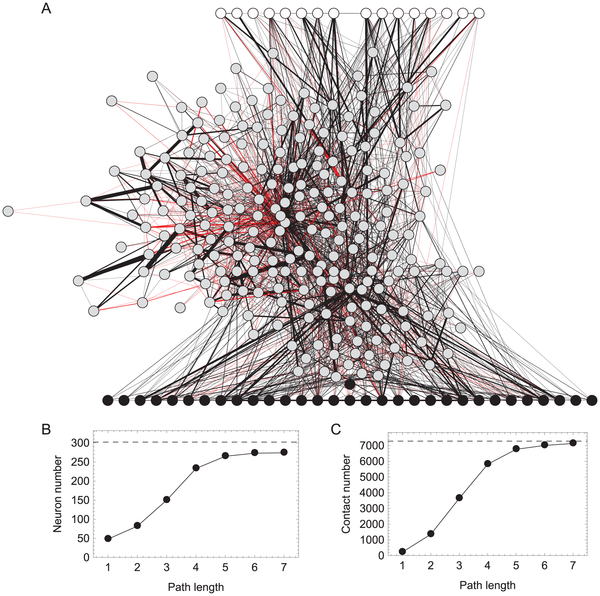
"We develop a neuroanatomically-grounded model of salt klinotaxis, a form of chemotaxis in which changes in orientation are directed towards the source through gradual continual adjustments. We identify a minimal klinotaxis circuit by systematically searching the C. elegans connectome for pathways linking chemosensory neurons to neck motor neurons, and prune the resulting network based on both experimental considerations and several simplifying assumptions. We then use an evolutionary algorithm to find possible values for the unknown electrophsyiological parameters in the network such that the behavioral performance of the entire model is optimized to match that of the animal. Multiple runs of the evolutionary algorithm produce an ensemble of such models. We analyze in some detail the mechanisms by which one of the best evolved circuits operates and characterize the similarities and differences between this mechanism and other solutions in the ensemble." Full article @ PLOS Computational Biology
Labels: animal behavior, connectome, robots


Monday, April 20, 2009
fish-bots
The world's first autonomous robotic fish are the latest attraction at the London Aquarium. Biologically inspired by the common carp, the new designs can avoid objects and swim around a specially designed tank entirely of their own accord. Full article at BBC News.

Labels: animal behavior, flocking, robots
Thursday, April 16, 2009
Insect communication/`No entry/' signal in ant foraging : Nature
"Forager ants lay attractive trail pheromones to guide nestmates to food, but the effectiveness of foraging networks might be improved if pheromones could also be used to repel foragers from unrewarding routes". Full article @ Nature

Labels: animal behavior, ants

